

Introduction to FMCG Market Segmentation
FMCG market segmentation is the practice of dividing a broad consumer market into smaller, more meaningful groups so that product, pricing, packaging, and communication decisions can be made with greater precision. In fast-moving consumer goods, this is not an academic exercise. It is a practical way to reduce wasted spend, sharpen product fit, and avoid launching something that speaks to everyone in theory but connects with no one in the aisle. For South African FMCG teams, segmentation is especially useful because purchasing behaviour varies across income bands, regions, household types, shopping channels, and occasions. A product that performs well with urban convenience shoppers may not resonate with family shoppers buying in bulk, and a claim that works in one province may feel irrelevant in another.
The commercial value of segmentation is that it helps teams answer a more useful question than “Who is our target market?” It asks, “Which group is most likely to buy, why will they buy, and what must the offer look like for them to choose it?” That shift matters in FMCG because most categories are crowded, replacement cycles are short, and many brands compete on small differences in price, format, flavour, convenience, or emotional appeal. Market Instinct’s work in South African FMCG research is grounded in that decision-making reality: segmentation should help brand and product teams decide what to launch, how to position it, and where the risk sits before additional budget is committed. As a Johannesburg-based consultancy focused on consumer and product research, the goal is not to produce a theoretical model for its own sake, but to create evidence that supports commercial choices .
In FMCG, segmentation only becomes valuable when it changes a decision: which consumer group to prioritise, what to change in the offer, or how to focus spend.
Can hide very different shopping motivations, price sensitivities, and usage patterns.
The Importance of Market Segmentation in FMCG
Segmentation matters because FMCG brands rarely fail for one reason alone. More often, the problem is misalignment: the product is useful but the pack is unclear, the flavour is liked but the price tier is wrong, or the brand promise is appealing but not convincing to the intended shopper. A segmentation approach helps teams identify which part of the market is worth speaking to first and what each group needs in order to respond. This is particularly important for South African companies that must make decisions within real budget constraints. Mid-sized businesses cannot afford to test everything with everyone. They need focused, decision-ready insight that supports a launch or reformulation case without overcomplicating the research process .
In practical terms, market segmentation can improve three areas of FMCG performance. First, it can improve product development by highlighting unmet needs or usage occasions that are not being served. Second, it can improve marketing effectiveness by making messaging more relevant and less generic. Third, it can improve retail execution by helping teams decide which formats, pack sizes, or claims should appear in which channels. For example, a household cleaner might need a different value story for a price-conscious township shopper than for a suburban shopper who prioritises convenience and fragrance. The product can be the same, but the route to purchase may not be. That is why segmentation is useful across the product life cycle, from concept development to launch and beyond. Market Instinct’s brand guidance specifically positions research as a way to help FMCG teams validate concepts, improve products, and reduce uncertainty before they invest further .
A weak segmentation is often too broad to guide action. If every consumer is included, no consumer is clearly prioritised.
Common Market Segmentation Strategies
FMCG teams usually combine several segmentation lenses rather than relying on one alone. The most common strategies are demographic, geographic, psychographic, behavioural, and, in B2B contexts, firmographic. Each lens answers a different commercial question. Demographic segmentation tells you who the consumer is. Geographic segmentation tells you where they are and what local conditions may influence them. Psychographic segmentation explains what they value and how they see themselves. Behavioural segmentation shows how they shop, switch, and repeat purchase. Firmographic segmentation is useful when the customer is another business, as with foodservice, wholesale, or distributor-led models. The strongest segmentation work usually blends these lenses so that the final picture is useful for both marketing and product development decisions.
| Segmentation type | What it explains | Best FMCG use |
|---|---|---|
| Demographic | Age, income, household structure, life stage | Pack sizes, price tiers, family versus single-serve offers |
| Geographic | Region, climate, urban or rural context, local preference | Regional flavour adaptation, distribution, and channel planning |
| Psychographic | Values, attitudes, aspirations, identity | Brand positioning, claim tone, premium or value storytelling |
| Behavioural | Occasions, loyalty, usage frequency, switching | Retention, occasion-based offers, repeat-purchase strategy |
| Firmographic | Business size, sector, location, buying needs | B2B foodservice, retail supply, and channel-specific offers |
For FMCG decision-makers, the key is not choosing the “most advanced” segmentation method. It is choosing the one that matches the business problem. If the issue is product sizing, demographic and behavioural lenses may be enough. If the issue is national rollout, geographic differences may matter more. If the issue is why a premium variant is underperforming, psychographics could reveal that the product is appealing but the brand story is missing an identity cue. A suitable study could combine several methods, depending on the brief, and the methodology should be selected according to the decision that needs to be made rather than the trendiness of the analysis .
Demographic Segmentation: Tailoring to Specific Age Groups
Demographic segmentation remains one of the most practical tools in FMCG because it links easily to product design, packaging, and media planning. Age is often the most visible variable, but it should not be used in isolation. A teenager buying a flavoured drink, a young professional purchasing on the way to work, and a parent selecting snacks for school lunchboxes may all sit within different age bands, but the real commercial distinction is the job the product performs in their lives. In other words, age is a clue, not the whole answer. South African FMCG teams should therefore be careful not to overgeneralise based on age alone. The better question is how age interacts with income, household size, and usage occasion.
For example, a personal care brand may find that younger consumers respond more strongly to convenience, scent, and social proof, while older consumers pay closer attention to trust, efficacy, and value per use. A breakfast cereal brand might find that households with children look for nutrition and familiarity, while young adults look for speed, taste, and portability. Demographic segmentation helps reveal these differences early enough to adjust product features or communication. It also helps teams avoid wasting budget on messaging that is too broad. Instead of designing for “everyone,” the brand can decide whether the primary opportunity sits with students, young families, working adults, or mature households. That narrower focus often leads to clearer packaging hierarchies, more appropriate claims, and stronger internal alignment on what the product is actually for.
The most useful demographic segmentation is tied to a specific decision such as pack size, price point, or claim selection.
Geographic Segmentation: Localizing Products for Diverse Markets
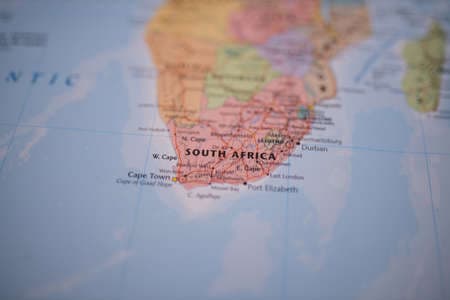
Geographic segmentation is especially relevant in South Africa because purchasing contexts and preference patterns can shift across provinces, cities, and retail environments. A national FMCG brand may assume that one pack, one flavour profile, or one communication style will travel well across the market. In reality, local climate, cuisine, income distribution, and shopping channels can influence what people expect and buy. Geographic segmentation allows a brand to localise without fragmenting its identity. It can guide where a product should be launched first, which regions deserve extra testing, and whether a pack or flavour should be adapted for a particular market cluster.
This matters for categories such as beverages, seasoning, sauces, personal care, and household products, where regional habits and household routines may shape demand. A beverage with a strong refreshment position may perform differently in hotter inland markets than in coastal regions. A sauce or spice brand may need to reflect local taste preferences more carefully to build repeat purchase. Geographic segmentation also helps distribution teams think more intelligently about retail channels. A product that fits convenience stores and forecourt trade may need a different pack or price architecture from one sold through wholesale or supermarket channels. For South African FMCG teams, geographic segmentation is not only about map-making; it is about understanding how local context affects perception, use, and purchase.